
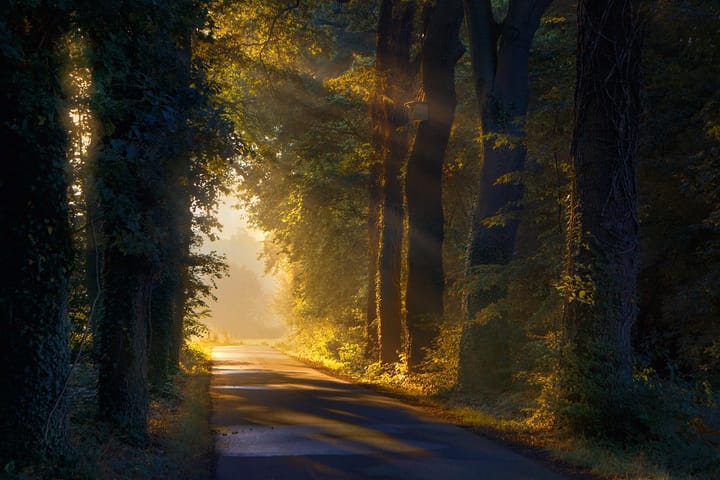
Recording the sound of a forest at dawn
Seven mornings at four o'clock, one microphone and twelve uninterrupted minutes of the dawn chorus.
 Ravi Menon
4 min read
Ravi Menon
4 min read
Before sunrise, a forest is almost silent. Then, one by one, the birds begin, until the whole wood is ringing. Ravi spent a week getting up at four in the morning to record that moment, and this episode is built around what he captured.

In this episode
- 00:00 — Four in the morning, in the dark
- 04:50 — Why birds sing at dawn
- 13:30 — The kit: microphones, wind and patience
- 22:15 — The recording, uninterrupted
- 34:00 — What the forest taught Ravi about listening

The dawn chorus
Birds sing most at dawn for a few reasons. The air is often still and cool, which carries sound further. It is too dark to feed properly, so singing is a good use of the time. And for many species, a strong morning song is a way to tell rivals and potential partners: I made it through the night, and I am in good shape.
Ravi talks to an ornithologist who can name almost every bird in his recording by ear alone. She explains that the chorus follows a rough order: the robins and blackbirds first, then the wrens, then a flood of smaller birds as the light grows.
A dawn chorus is not noise. It is a hundred conversations happening at once.
Ravi Menon
Recording nature is mostly waiting
Ravi is honest about how unglamorous field recording can be. He set up his microphones in the dark, then sat perfectly still for two hours, trying not to cough, shuffle or check his phone. On three of the seven mornings, the recording was ruined: once by rain, once by a distant plane and once by a very curious dog.

The recording
The middle of the episode is simply the recording itself, twelve uninterrupted minutes of the chorus building from silence to its peak. Ravi does not speak over it. Listeners have written in to say it is the part of the show they play again and again, usually at night, to fall asleep.

What changed
Ravi ends with a reflection on listening. After a week of mornings in the forest, he found he was hearing more everywhere: the different notes of traffic, the sound of his building's pipes, birds in the city he had never noticed before. Listening, he says, is a skill like any other. It gets better with practice.
His challenge to listeners is simple. Find ten minutes this week, sit somewhere outside, close your eyes and count how many different sounds you can hear. Most people stop at five. Keep going.
Behind the episode
Ravi used two small omnidirectional microphones spaced about thirty centimetres apart, a simple setup that records sound roughly the way your ears hear it. Put on headphones for the recording section and you will notice that birds seem to sing from different places around you. That is the whole point.
What he left out
Ravi recorded more than fourteen hours of audio over the week. The final episode uses about twenty minutes of it. What did not make the cut: a deer that walked right up to the microphones and sniffed them, a very loud woodpecker and a long stretch of rain on the tent roof that some listeners have asked us to release on its own.
Listener question: where can I hear a dawn chorus?
Almost anywhere with trees. City parks, cemeteries and even quiet gardens have surprisingly rich dawn choruses in spring. The trick is to be there early, about an hour before sunrise, and to stay still. The first birds start in near darkness, and the full chorus peaks around thirty minutes before the sun comes up.
Coming up on Field Notes
Next season, Ravi takes his microphones to the coast: tide pools, harbours, a lighthouse and the strange clicks and whistles of a seal colony at night. He is already practising getting up at four.
Credits
Recorded and hosted by Ravi Menon. Bird identifications with thanks to our ornithologist guest, who was very kind about the dog.